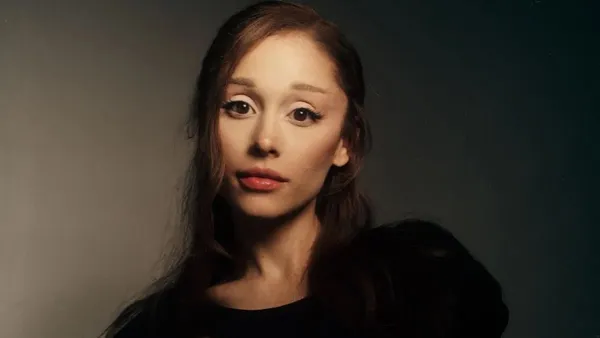
Taylor Swift extended her stay in New York City for a different kind of championship: songwriting. After being nominated back in October, the mega-star was officially inducted into the Songwriters Hall of Fame during a ceremony held at the Marriott Marquis Hotel on Thursday night.
At 36, Swift is the second-youngest inductee and the youngest woman ever to receive the honor. (Stevie Wonder was 32 when he was inducted back in March 1983.) Swift is also the first inductee to have also previously won the Hal David Starlight Award,which, since 2004, has honored “innovative young songwriters who are at the apex of their careers and making a significant impact in the music industry with their original songs.”
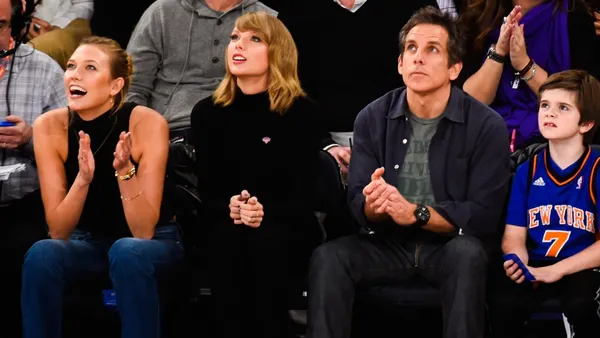
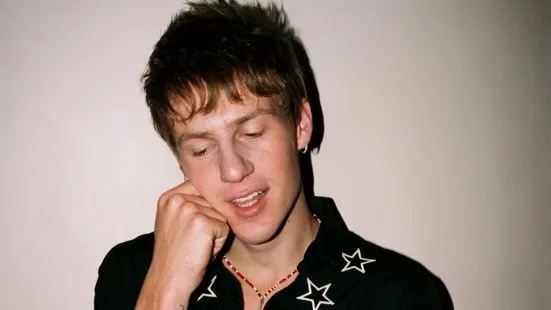
As part of the induction process, Swift had to chose five standout songs from her catalog as examples of her prowess: “All Too Well (10 Minute Version),” “Blank Space,” “Anti-Hero,” “Love Story,” and “The Last Great American Dynasty.” While she didn’t perform during the event (she was unapologetic about losing her voice while screaming at the Knicks game and singing along to all of Thursday evening’s performance), she and husband-to-be Travis Kelce were seen enjoying sombr’s renditions of “cardigan” and “Dear John.”
After being formerly inducted into the Songwriters Hall of Fame by none other than Steven Spielberg, Swift took the stage herself and fought through her scratchy voice to deliver a 20-minute long, passionate speech. She explained why she’d asked for Spielberg to induct her, tearfully thanked her parents and brother for moving to Nashville so she could pursue music, and offered her advice to up-and-coming songwriters. Read a full transcript and watch the speech below.
Swift was joined by a host of other inductees: Alanis Morissette, Kenny Loggins, Christopher “Tricky” Stewart (Rihanna’s “Umbrella”), KISS’ own Paul Stanley and Gene Simmons, Terry Britten and Graham Lyle (Tina Turner’s “What’s Love Got to Do with It”), and Walter Afanasieff (Mariah Carey’s “All I Want For Christmas Is You”).
In a statement, SHOF chairman/funk god extraordinaire Nile Rodgers said, “The music industry is built upon the incredible talent of songwriters who create unforgettable songs. Without their artistry, there would be no recorded music, concert experiences, or engaged fans. Everything originates from the song and its creator. We take great pride in our ongoing commitment to recognizing some of the most culturally significant composers in history. This year’s lineup not only showcases iconic songs but also celebrates unity across various genres. These songwriters have profoundly impacted the lives of billions of listeners worldwide, and it is our privilege to honor their contributions.”
The pop star is currently in the midst of promoting Toy Story 5, which features her original song “I Knew It, I Knew You.” During the Los Angeles premiere on Tuesday, Swift delivered a surprise performance of the track and performed a duet of “You’ve Got a Friend in Me” with Randy Newman. She also got Tom Hanks and Tim Allen to sign her Toy Story VHS.
Taylor Swift’s Full Induction Speech at Songwriters Hall of Fame:
“I want to begin by thanking the person that introduced and inducted me tonight. He thinks that this is the first time he has inducted me into something, but what he may not be taking into consideration is that through his decades of spellbinding storytelling, Steven Spielberg has unknowingly inducted me and countless others into his sacred club of expansive world-building. From the time he was a kid, every time he dreamed something up, he wanted to do anything humanly possible to be able to show it to you. I watched his films pivot between different genres: action, sci-fi, historical epic, to drama to comedy to romance, fantasy, to musical, and I watched him ace every single genre. And that kind of limitless creativity isn’t just inspiring to burgeoning filmmakers: because of examples like Steven’s, I trusted my imagination regardless of if it was taking me somewhere new and uncharted. And every time I dreamed something up, I wanted to do everything humanly possible to be able to play it for you.
“A few months ago when the Songwriters Hall of Fame asked me about my heroes and the creatives who shaped my storytelling and who I might want to present this award to me, I said Steven’s name. And about an hour later to my absolute delight, I ended up on the phone with him and his legendarily effervescent wife, Kate Capshaw, who is here tonight. And he was telling me yes, absolutely he would be thrilled to be here. I was completely blown away because the man has a massive film called Disclosure Day that’s coming out at midnight tonight and he’s still going to agree and show up to do this for me a few hours before it comes out. Wouldn’t that be impossibly hard to balance? Wouldn’t that be too difficult scheduling wise? I’m trying to give him an out. At which point, Kate said something I’ll never forget. She said, ‘Good and true things are easy.’
“And if I look back at my entire 23-year career in music, the ups and downs, the industry battles, the trials and tribulations, the tears and the cheers and the dogpiling of doubt, the criticism, both fair and unfair, the complete loss of privacy, the world tours and the ego wars and the twists of fate, the absolute magical chaos of this path that I chose when I was too young to remember it ever being a choice at all, songwriting was the easiest thing I ever did. Not because it didn’t take effort, it definitely did, not that it wasn’t frustrating at times, because it could be, and not that my songwriting didn’t haunt me relentlessly until I cracked the perfect internal rhyme scheme for the third line, the second verse to the point where my teachers would call me out for not paying attention because that definitely happened.
@consequence Taylor Swift talks asking Steven Spielberg to induct her into the Songwriting Hall of Fame and his influence on her craft #taylorswift #stevenspielberg #songwritershalloffame
“But when I say that songwriting was the easiest part for me, I think what I mean is that it was instinctual. No one taught me how to do it. I had to be taught how to entertain the crowd and learn choreography and be less annoying. And navigate the industry and fiercely protect my insanity. I had to learn all of that over time through difficult lessons and massive amounts of trial and error and chaos and calamity. But songwriting for me, it’s pretty much the only thing I ever just naturally did. My parents tell me stories about driving home from taking me to see Disney movies. And in the theaters and noticing I was singing the songs on the way home from the film in the car. But I was changing the lyrics and the melodies to be about my own life. As a little kid, I loved to sing, I love to do children’s theater performances, but everything came together when I learned to play guitar at 12. I wrote my first song after learning my first three chords. It felt easy to work incredibly hard at this. It felt easy to nurture something I loved so much. To watch calluses form on the tips of my tiny fingers and to become a constant observer of the human condition. Because people’s feelings, passions and motivations have always fascinated me and it was easy to choose songwriting over everything else in my life. But it couldn’t have been easy for my parents and my brother to just pick up and move our entire family from Pennsylvania to relocate to Nashville so that I could hone my craft in the songwriting capital of the world. But after making obvious that this was not even remotely a temporary phase their tween daughter was going through, they uprooted their entire lives to move me to Music City. And even though words are supposed to kind of be my thing, I will never be able to express my gratitude to you guys for doing that for me. You’re the reason I’m here tonight.
“In Nashville, I took meetings and I played acoustic shows until I was able to secure a publishing deal. I got signed when I was 14 and I got the chance to work with incredibly wise and experienced cowriters. People like Liz Rose, Troy Verges, Hillary Lindsey, Robert Ellis Orrall, Angelo [Petraglia], the Warren Brothers and the late but very loved Brett James. So I’d written over 100 songs on my own at that point. This would be my first experience co-writing. My parents had raised me to be over-prepared, show up early, never assume the world owes you anything, and I might have been 14 years old but I didn’t want anyone in a professional setting to treat me like a baby or for these songwriters to think that I expected them for me to slap my name on. So at this point, I started to approach songwriting like a full-time vocation. And that didn’t mean just showing up to my appointments and hoping that the ideas would show up too. It meant spending nearly all of my free time writing ideas in preparation for my writing sessions and then stopping myself at a certain point to allow my cowriters to later weigh in. So some of these ideas were 50 percent done, some were 75 percent done, some were just a hook with lyrics and melody or a chorus. I stockpiled them so that when I went into a writing session with a cowriter, I’d play them and sing them a few of these ideas, sort of like it was a pitch session, and then whichever idea they liked the best was the one that we would finish together.
“I kept long lists of words that I loved and I added to it every time I thought of a new one. I developed a serious fixation on alliterations and juxtaposition and I wrote poems when I didn’t have the right melody yet. When I was inspired by my own life, my curiosities about the world or my very dramatic but extremely dire crushes on boys at school who would never once talk to me, I wrote about that. If I wasn’t inspired by my own life, I’d use other methods to spark my imagination. I figured if the idea doesn’t come to you, you have to become your own search party and go find it. Often times, I’d put a movie on. I’d pause a scene and try to write a song from each character’s perspectives — even the villain. I’d explore what they were going through and try to say it in a vernacular that that character might use. And this is how I learned that every person has a self-constructed justification system that they live by and we each get to decide which choices we’re willing to condone ourselves. And we each decide what is good and true, fair and right. And so, with my metaphorical Mary Poppins bag of hooks, choruses and bridges, and my non-metaphorical backpack from sophomore year of high school, I’d walk into my writing sessions on Music Row.
“One of my favorite stories from this time in my life was when I got a chance to write with one of my favorite songwriters of all time, Craig Wiseman. Craig is an absolute savant of a writer. He’s also one of the funniest people I’ve ever met too, so I know that I can tell this story. I brought in about five different semi-formed songs that I thought were really strong. Because it was Craig Wiseman, I led my pitch with a song I really thought was special. It was pretty much done except for a few lines and a bridge. So filled with nervous anticipation, I played it on guitar and sang it for him and when I finished, he very kindly told me that he thought it was good but he didn’t really get it and he’d love to hear the other ideas I brought. A few songs later, we landed on one that resonated better with him and we had a fantastic writing session. It turns out, you really can and should meet some of your heroes. But years later, we still look back on that session and we laugh about that first idea I played for him. I ended up going home and finishing the song on my own later that night. It was called ‘Love Story.’
“Finishing that song that night was me trusting my instincts as a writer. Regardless of any feedback or information I had about what other people’s take on it might be. I think now more than ever, in an industry that seems to be consumed by metrics, data, analytics and we’re trying to predict whether something will trend or not, writers need to trust their human intuition. And I think the thousands of hours I’ve spent lovingly working at this craft have taught me to really be able to identify the ideas that jump out at me, sparkle and linger, the ones that matter to me the most.
“I have to say thank you to sombr for that perfect performance. His writing is so exceptional that it makes me actually envious and I love that feeling. He’s gonna be the top of my Spotify Wrapped this year guaranteed, it’s locked, it’s in the bag and a lot of my late night debates with my friends about the state of the music industry involve me saying very loudly ‘Sombr is the future and he does it all on his own and he doesn’t need AI. The kids are fine.’ And so obviously, Shane is a very well-adjusted person and artist, and doesn’t need any of my advice at all.
@consequence Taylor Swift gives advice to young songwriters as she gets inducted into the Songwriters Hall of Fame: “Feedback and skeptism and criticism are inevitable. You can take what’s useful or constructive from that information, and leave out what’s simply damaging to your creativity.” #taylorswift #songwriter
“There’s so many incredible writers who I love who have come into their own recently and if I had advice for young artists though who should perhaps be interested in it, I would say that you really have to prioritize what you love down to your very core. Because you’ll need that if your song ever gets heard by the public. Or the critics. Or the haters posing as critics or the people who are chronically online or the robots posing as people who are chronically online. Songwriters have a real balancing act that they have to conduct every day because inherently we’re supposed to let it all in, feel deeply and sensitive to the point of near delusion and then reflect those feelings and illusions back to the world in the form of a three-and-a-half minute sonic landscape. Or a bop, or a folk tale, or a battle cry, or a 10-minute coming of age song about a scarf.
“So it’s hard to harden yourself to certain brutal elements of this world, but allow me to now make a hard pivot and pull out a quote I love from the show Yellowstone. When father says to his son, ‘It’s the one constant in life, son. You build something worth having, somebody’s gonna try to take it.’ So John Dutton was talking about a ranch. But I’m using this quote to refer to your self-worth, your peace of mind and your singular vision as a creator. Positive feedback and people loving what you wrote feels incredible and I hope you get lots of it. But you need to be ready to receive negative feedback, whether you seek it out or not. It’s no longer a shock that this is how things work, but somehow it feels like I have this conversation with a young writer every other week. If you make anything awesome, someone out there is bound to say horrible things about it or twist what you meant into something completely unrecognizable to you. What I hope you discover is this: You can be sensitive but also durable, and you can accept that feedback and skepticism and criticism are inevitable. You can take what’s useful or constructive from that information and leave out what’s simply damaging to your creativity. No one does or should make art that appeals to everyone everywhere all the time. My favorite artists detailed and singular in its voice, therefore it can’t be digested and metabolized by everyone who experiences it in the same way.
“I’m very frequently told by people how they feel about my music. That they never really got my music until they got their heart broken or started driving their daughter to school every day or until I made an alternative album in the pandemic called folklore. Or that they only like the hits or that they only like the ones that weren’t hits, or that they don’t like any of it at all. But it doesn’t feel uncomfortable for me to get feedback of all sorts because I know where I stand regarding the work I’ve made. As writers, we can only hope to meet people where they are in their lives. But you can’t ever orchestrate or force the encounter. You just have to hope that in some exquisite happenstance you bump into them on the same path at the same time. That somehow, amidst the noise of life, a line we wrote or a melody that we crafted cuts through, and they hear it and feel something. But they get chills or feel lighter or think of someone they love. Our goal is to elicit that glint of recognition in another human being because something that felt good and true to us feels good and true to them at the same time. And in that moment, when someone blurts out, ‘I love this song,’ it was easy.
“Before I go, there’s so many people who helped me get to this podium, who vouched for my writing and cared about my perspective before anyone cared about my name. And then the fans came along and they wanted to hear my stories, my prose, my hooks, my heartache, and nothing, nothing delights and surprises me more than the fact that 20 years after my first song came out, they still wanna read the next chapter. Nothing makes me happier than when someone tells me that they used to listen to my music with their parent, and now decades later, they listen to it with their own child. Or that they listen to it with their best friend or when a couple tells me that ‘Love Story’ is their song. Or where somebody does like a cute little dance to ‘The Fate of Ophelia,’ or I hear people in different countries singing ‘Opalite’ in their own accents or someone tells me that the song ‘Enchanted’ gets their baby to stop crying. I’m humbled by the ways that fans have immortalized my songs in their own individual ways, allowing them to be the underscore of some of their real life expeditions on this earth, the magnificent moments as important to me as the seemingly mundane.
“Lastly, I know that when it comes to legacy, there are so many songwriters who have had such remarkable careers before me, and I know that the Songwriters Hall of Fame could have chosen any of these deserving and brilliant writers to receive this honor this year, but you chose to include me in this group of exemplary songwriters to be inducted into the Hall of Fame class of 2026 tonight, so I wanna thank the voters for celebrating and honoring the best and truest parts of my life. I’ll be forever grateful. Have a good night guys. Thank you.”