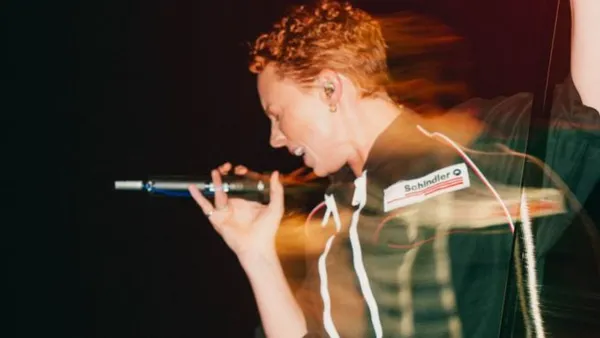
In a swirl of grass, dust, and Bieber fever, Coachella 2026 has come and gone. The first weekend was windy, challenging campers and one particularly big DJ named Anyma — but for most of us, the occasional dusty gust never managed to spoil the party.
This year’s festival warranted lots of discussion online and IRL (as usual with Coachella), with plenty of chat circling around Justin Bieber’s much-anticipated, YouTube-derailed headlining set, the ridiculous pricing and lack of last-minute ticket supply, and, at least in my case, some of the worst set times conflicts I’ve ever seen at Coachella. Still, depending on your musical priorities, Coachella 2026 kicked off the year’s festival season with some of the most memorable performances in the event’s history. When the curation is as strong as Coachella’s, the experience pays for itself.
Get Coachella Weekend 2 Tickets Here
Like in previous years, nearly all of the festival was livestreamed on YouTube, with all the biggest slots aired in real time. If you indulged in Couchella this year, you avoided paying $20 for a beer and coming home each night with your face caked in desert dirt, which is great. But if you want to know what it felt like running around the Empire Polo Fields in Indio, California this year for Coachella’s 25th edition, here’s what went down.
Something to Beliebe In
Passes this year sold out quickly, but often at Coachella, the resale market — either AXS’ official resale platform or sites like StubHub — will have a relatively accessible supply of tickets, with prices usually dropping to semi-normal rates in the days before the festival. That was not the case this year; tickets were scarce and exorbitantly priced if you didn’t participate in Coachella’s initial sales period. “Boo hoo, you waited ’til the last minute and now you don’t get to go to your chic desert festival,” you may think. But it’s a shame there was no room this year for last-minute whimsy. FOMO is real!
There are a lot of factors that contributed to such high demand, but Justin Bieber was the leading cause. His rare appearance, and his teen fans aging into adults with disposable income, provided an unavoidable nostalgic pull. I wouldn’t say the festival was overrun by Beliebers, but looking around the crowds on Saturday in particular, there were a lot of young Millennials and older Gen-Z looking to indulge in some of those middle school-aged memories of when Bieber was the ultimate idol.
So, how did Bieber’s set go over with the Coachella crowd? It probably depends on who you ask. The first act — all SWAG and SWAG II — was a snooze. The YouTube portion, beyond being hilarious, was the opposite, as fans were waiting with bated breath to hear the first three notes of songs like “Baby” and “Sorry” and went absolutely nuts when they did. But when you put it in perspective, this is Coachella’s highest-paid headliner in history. He reportedly made more than Beyoncé and Lady Gaga’s show-stopping turns, and that money was spent on him pulling up memes on YouTube.
What the set did, though, was provide a complete view of Bieber’s arc. It proved that he is not a generational pop star. He was a child prodigy with a golden voice who transformed into a teen idol, dabbled in the EDM boom of the mid 2010s, and settled comfortably in his chosen genre of R&B, the style that brought him exposure in the first place. He sounded excellent at Coachella. The songs, though, were merely fine.
Are You Having a Bad Time?
Last year’s political subtext rose to the surface with a fiery performance from Kneecap, a guest spot from Bernie Sanders, and other moments of explicitly denouncing Trump. The sets I caught this year, however, were less concerned with making overt political statements. Plenty used a soft power approach of championing community, encouraging the audience to take care of each other and relish in the joy of expression. This was absolutely true of Turnstile’s magnetic, mosh-heavy set (one of the best I’ve ever seen at Coachella), as well as KAROL G’s celebration of Latina heritage, and FKA twigs’ stunning, ballroom-based “Body High” performance.
But there were a few sets that really took a different turn and embraced the chaos of dissonance and dystopia. Nine Inch Noize was a nightmare, and I mean that in a good sense; these were not EDM remixes of Nine Inch Nails songs but brutal reinterpretations, with backup dancers that clumped like a horde of zombies and writhed all over the stage. Seeing both Nine Inch Noize and Interpol in the same night was an oddly fitting double bill; I realized both acts write dark, claustrophobic songs about sex and alienation, about having a bad time. Model/Actriz followed on Sunday with more caustic intensity, where songs about the purity of connection and expression are rendered fraught, fractious, and unnerving.
Even the non-music experiences had some heaviness to them; mainly Radiohead’s “Kid Amnesiac” immersive film installation, which took place in a literal bunker built on the Coachella grounds. It featured four large screens playing the new film, with attendees converging in the center. The film itself featured one of Radiohead’s mascots traveling through a variety of liminal spaces, all of them containing some element of digital stimuli. There was a definable sense of sadness and confusion as we followed this character through these various rooms and spaces, including a powerful culminating moment where they stood in a control room surrounded by other figures and glitching displays. There we were, together but alone in a room with multiple screens, showing a figure alone but surrounded by a room full of screens, soundtracked by some of Radiohead’s most dystopian music. It was intense, but very thoughtful. I highly recommend.
Guess Who
Every year, there seems to be a guest appearance that has everyone at the festival talking. Last year it was Bernie Sanders introducing Clairo, the year prior it was Olivia Rodrigo guesting with No Doubt and Billie Eilish coming out during Lana Del Rey. This year, there just wasn’t a guest of that caliber. I mean, Jennifer Lopez apparently came out during David Guetta’s set at the tucked-away Quasar stage, but I hardly heard any rumblings about that; Lizzo was also out for Sexyy Red and basically gave a life-size Labubu a lap dance, which, okay.
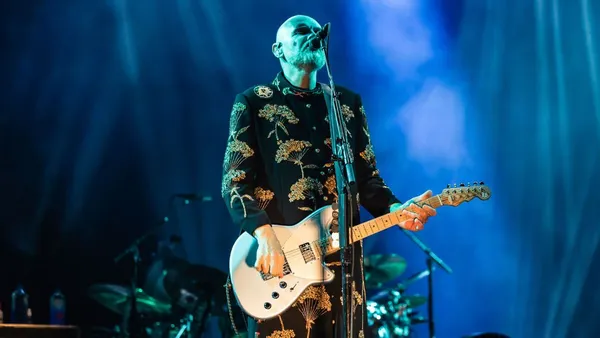
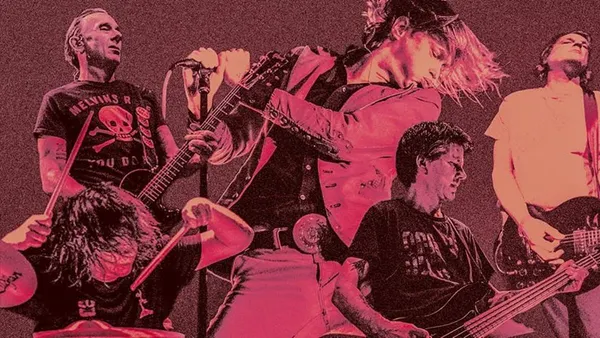
Overall, there was a curious lack of “you had to be there” hype regarding guest appearances this year. Dare I say some of them were random and maybe unearned. Why was sombr doing “1979” with Billy Corgan? Horsegiirl was a guest for both PinkPantheress and Wet Leg, and both appearances were more or less uneventful. Teddy Swims essentially did karaoke for his set, but Joe Jonas, David Lee Roth, and Vanessa Carlton is a pretty weird mix of guests. I can’t believe Karol G brought out the guy from Cigarettes After Sex, of all people. Maybe it’s good that artists were more focused on bringing their most reliable live shows, but this year’s guest list felt unusually light.
Turn It Up
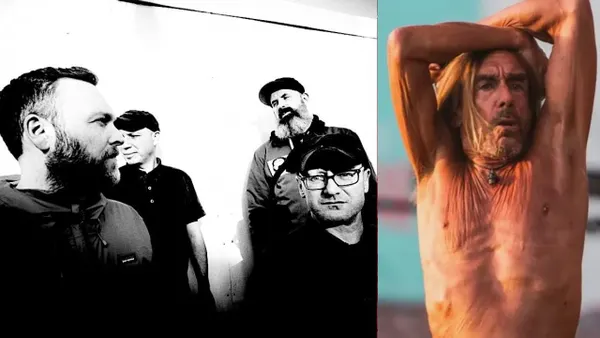
Jack White’s surprise appearance on Saturday was an incredible rock show and, as our publisher Alex Young wrote, will be remembered as one of the year’s best sets. It also was the loudest show I’ve ever seen at Coachella (and maybe ever?); that is until the next day when I saw Iggy Pop at the same stage. I mean, holy shit. I actually had to watch from outside the tent because it was so crushingly loud. Leave it to the 78-year-old punk legend to bring a visceral amount of energy to a festival with a more clean-cut, influencer-friendly reputation. Beyond the noise, though, it was genuinely inspiring watching Iggy Pop and his band ripping through a 50-minute set with such chaotic energy. The crowd may have been small, but his legacy looms large.
Getting Activated, Getting Killed
One thing you wouldn’t know based on the livestream is that brand activations are still immensely popular at Coachella. Even in the early hours of the day, when no scheduled acts were playing, the Gap and American Express booths had insane lines. There aren’t just a few brand activations; there are many, and it looked like each one had a steady stream of attendees. I don’t bring this up to shame people who go to them, or to lament how the festival has ‘gotten corporate’ (they did a long time ago). I bring it up because it highlights the strange, modern friction of the festival experience: we spend all morning standing in corporate lines for the chance to spend all night losing ourselves in music that tells us we don’t need any of that stuff to feel alive.
It’s difficult to describe this kind of subtle tension that Coachella wields these days. It’s a lot of whiplash — liberated at one punk-forward set, then overhearing a 43-year-old tech exec complain about the lack of usable WiFi in VIP. It’s very easy to feel swallowed whole by the illusion of a luxurious future at Coachella, where the power of the collective is illuminated by its artists but the brand-forward framework, behind closed doors, actively works against that same power. And at the center of it is you — you paid for the experience, so you get to be the main character.
It’s a clever trick to implicitly emphasize self-absorption as a foil to what the artists are actually saying when they’re on stage. Especially in the context of rock and punk music, which was a massive feature of this year’s lineup. You’ll go to a set and get activated by heavy, blistering rock music, but then upon exiting the tent, the festival’s big money sheen numbs you back to sleep. Coachella needs you to forget that feeling quickly, and it’s very good at making sure you do.
“I’m getting killed by a pretty good life,” sang Geese’s Cameron Winter on Saturday during their showcase set in the Gobi tent. The phrase kept popping in my head throughout the weekend as I enjoyed the festivities, reflecting on the innocence I felt in my early days attending Coachella in the early 2010s and the complicated nature of being there as a 30-year-old in 2026. I was stuck in my bullshit too, trying to remember that while we were complaining about the WiFi, the world outside was being subject to a kind of violence I’ve never known. I became equally enthralled by another Cameron Winter lyric, one that aptly summarized the entire weekend: “There is only dance music in times of war.”
Coachella 2026 Photo Gallery (click to expand)